
Built Once. Still Selling Three Years Later.
Mike Zeller, The Genius Within
A multi product funnel: tripwire entry offer, upsell path, confirmation flow and buyer segmentation, built so each buyer was worth more than one price
- Client
- Mike Zeller, coach, consultant and author
- Vertical
- Personal development and coaching
- Entry offer
- The Genius Within book, free plus $9.95 shipping
- Upsell 1
- Workbook and video training toolkit, $47
- Upsell 2
- The Genius Within course, $297
- Upsell 3
- One to one VIP session with Mike, $697
- Funnel steps
- 14, including a book funnel, a workshop funnel and a waitlist
- Transactions
- 347 to date, still running
- Revenue
- Six figures
- Stack
- Built on ClickFunnels and ActiveCampaign, later migrated to GoHighLevel
- My role
- Direct client. Funnel architecture, offer sequencing, automation and integration
A free book is not a business until something sits above it
Mike Zeller had written a book and had an audience that already knew his work. The other funnels built for him, Magnetic Microdosing and Magnify Your Abundance, were launches: they went out to the list, produced their revenue in days or weeks, and finished.
This one had a different job. The entry offer was the book given away free, with the buyer paying $9.95 shipping. That model exists for one reason: to convert a reader into a buyer. The book is not the product and the $9.95 is not the revenue. What is being bought is the transaction itself, because somebody who has entered a card is a different person from somebody who has downloaded a PDF.
Free plus shipping, on its own, loses money. That is not a flaw in the model, it is the model. The economics only work if something exists above it.
Most people build the front end and stop. The book funnel goes live, orders come in, everyone is pleased, and six months later the business has a lot of $9.95 transactions and no idea why the numbers do not add up.
There was a second problem. A launch produces a spike and then nothing. Mike's other funnels did that job well, but a business that only earns during launches has to keep launching, and the list gets tired. What was missing was something that produced revenue on the days nobody was launching anything.
What I built
- A four rung price ladder above a free plus shipping entry
The book free with $9.95 shipping, then a $47 workbook and video training toolkit, then the $297 course, then a $697 one to one VIP session with Mike. Seventy times the entry transaction at the top rung, reached by a series of small decisions rather than one large one.
- Three one time offers in sequence
Each upsell presented immediately after the previous purchase, in the window where the decision is already made and the card is already entered. OTO1 the toolkit, OTO2 the course, OTO3 the VIP session.
- Confirmation pages built per path
Separate order confirmations for book only, book plus toolkit, and book plus course. A buyer who took two upsells sees something different from one who took none. This is the part most funnels skip, and it is where the next step either happens or does not.
- A second funnel inside the same system
A workshop funnel with its own upsell and its own confirmation pages, sharing the same buyer data and automation rather than running as a separate island.
- A waitlist opt in
Built for pre-launch demand capture, so interest arriving before a launch had somewhere to go.
- A separate sales page for paid traffic
A dedicated ads page alongside the organic path, so cold traffic and warm list traffic each met a page written for them.
- ActiveCampaign automation across all of it
Buyer state driving everything downstream. What somebody owned decided what they saw next and what they stopped seeing, across fourteen funnel steps and four products.
- Later migrated to GoHighLevel
The whole system was eventually moved off ClickFunnels onto GoHighLevel: funnels, automation and buyer history together. A fourteen step funnel with four products and three separate confirmation paths is not a straightforward migration. It is running on GoHighLevel today, which is also why the original ClickFunnels stats no longer exist.
The funnel, step by step

Sales page
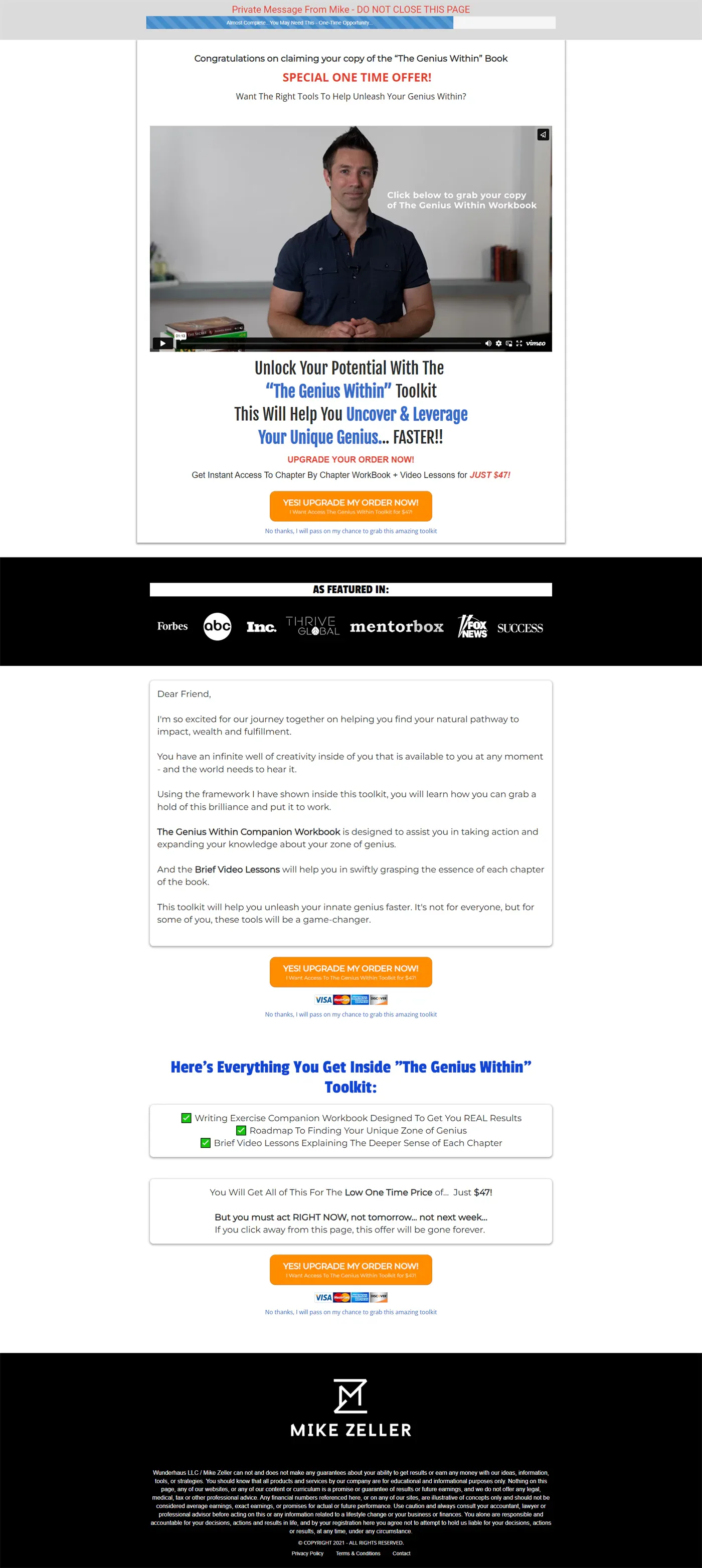
OTO 1
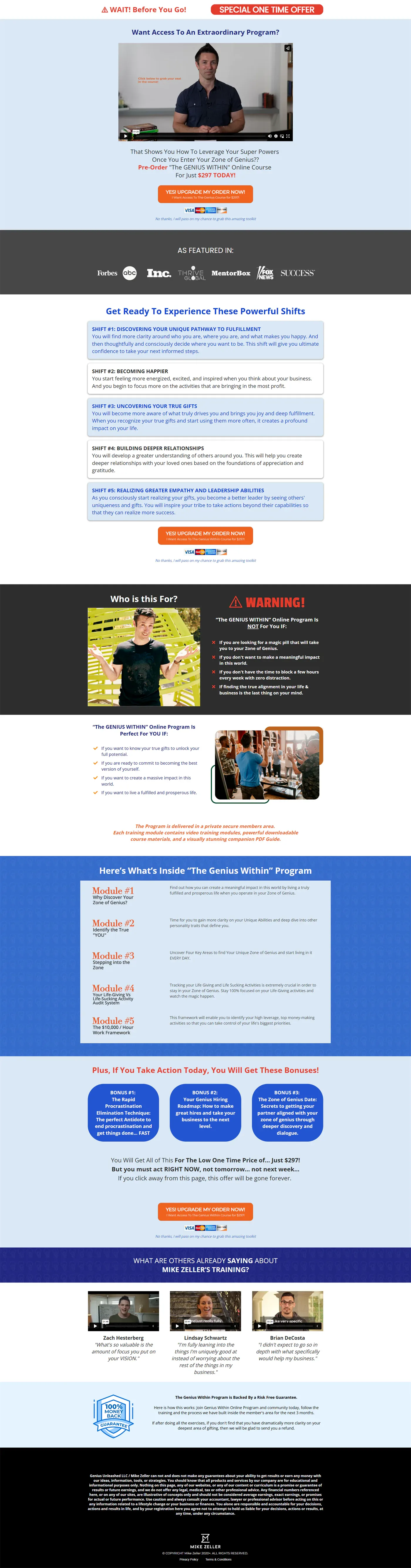
OTO 2
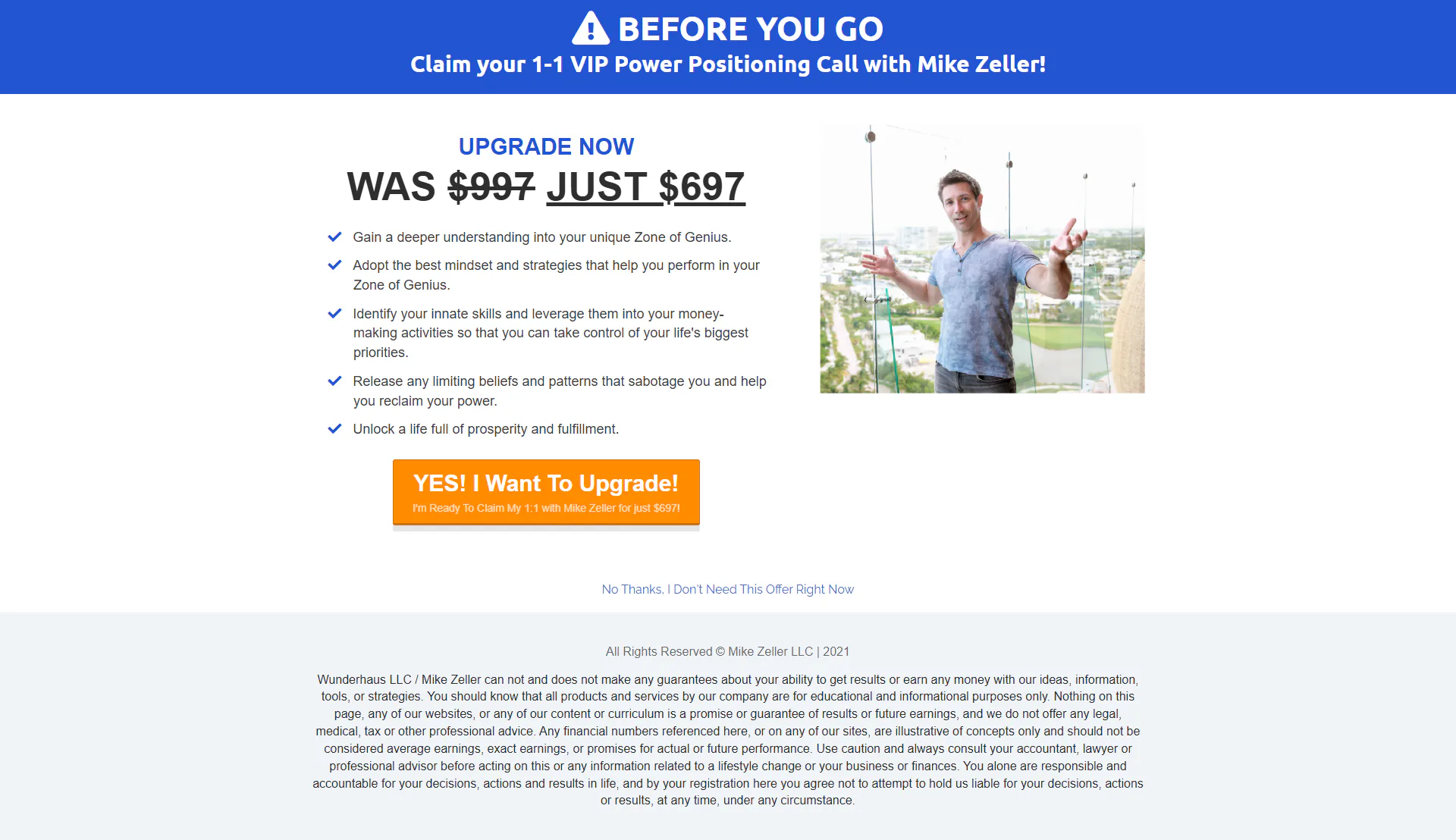
OTO 3
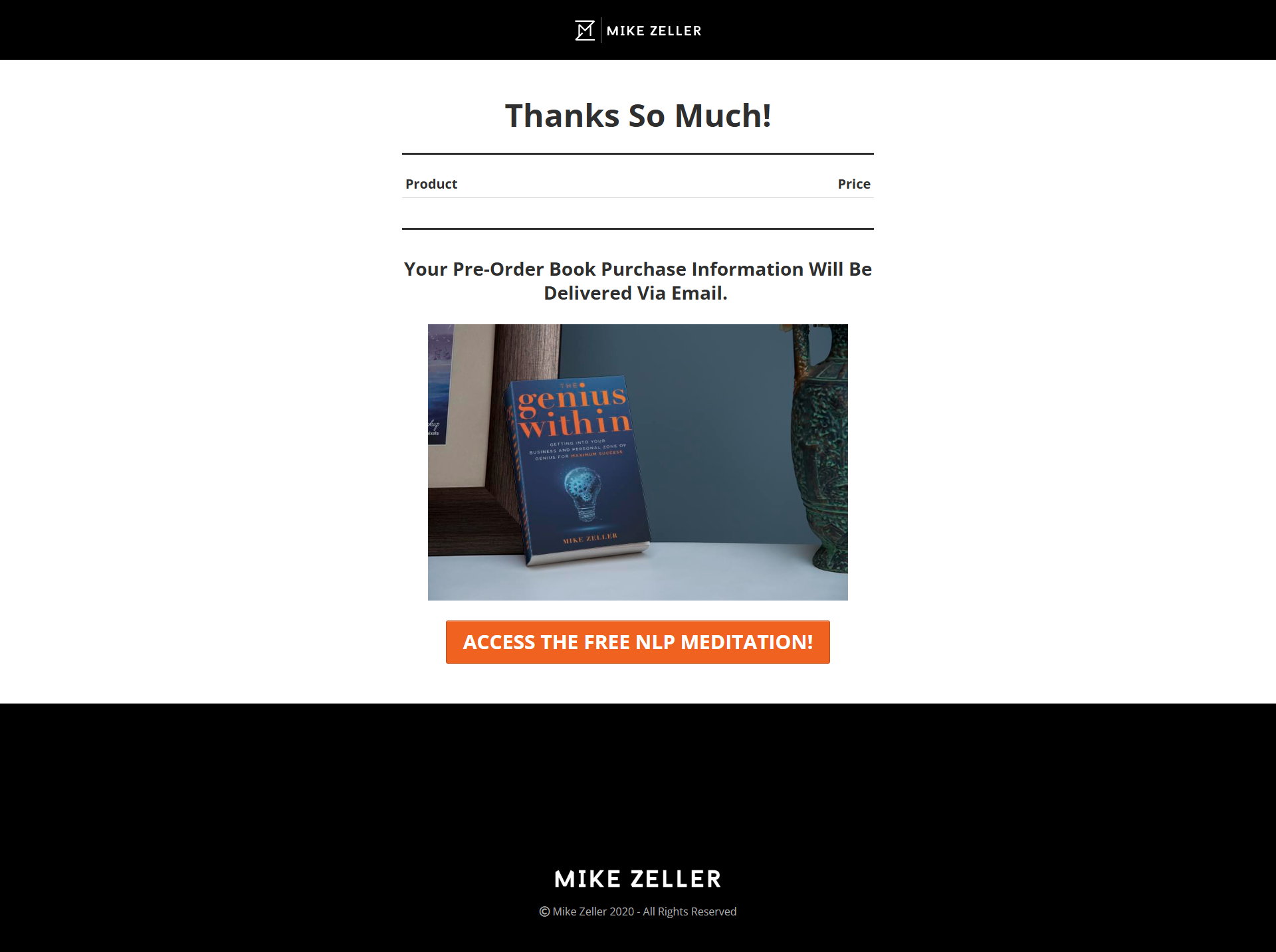
Order confirmation
What it produced
347 transactions across four products, and six figures in total sales.
The number that matters more is the date range. The oldest transactions in the sales log are over three years old. The newest is from the past week. This funnel was built once, migrated to a different platform along the way, and is still selling today without a launch behind it.
The sales log also shows the ladder doing its job. Individual buyers appear repeatedly, taking the book, then the toolkit, then the course, sometimes across separate sessions. That ascent is what the architecture was built for, and it is visible in the transaction record rather than assumed.
A note on the evidence. The sales log shows every transaction, every product and every price across the funnel's life. The six figure total is accurate but not screenshotted: the funnel level stats page was never captured before the ClickFunnels account was closed during the migration. The transaction record is the evidence here, and the total is stated on my word rather than shown.
What applies to a business like yours
Three questions worth asking about your own offers:
- If you have a low ticket product, what does a buyer see in the sixty seconds after they purchase it?
- Does your business earn anything in the months between launches?
- Do your confirmation pages differ depending on what somebody bought, or does everyone see the same one?
The third question sounds like a detail. It is where a buyer either climbs or stops.
Services behind this project
The thinking behind this project: A launch earns once. A ladder keeps earning.
The Book Was The Door
The book was never the product. It was the door, and what mattered was that there was something on the other side of it.