
"Webinars Do Not Work For My Audience" Is Usually A Build Problem
Somebody runs a webinar. It sells nothing. They run another. It sells nothing.
They conclude webinars do not work for their audience, and they stop.
The conclusion is reached honestly and the evidence for it is real. It is also wrong almost every time, and the reason is that only one part of the funnel was ever tested.
Why do webinars fail when the presentation is good?
Because the presentation is roughly a tenth of what decides the outcome.
Around it sit the parts nobody examines. Whether the registration page converts. Whether reminders land in the gap between signing up and showing up. Whether attendance is recorded anywhere the follow up can reach. Whether somebody who left at minute twenty gets treated differently from somebody who watched to the end.
Get those wrong and a good session reaches a small number of the wrong people, most of whom never turned up. The number at the end is zero, and the presentation was never the variable.
A coach in that position has run a valid experiment and drawn an invalid conclusion, because the thing they think they tested is not the thing that failed.
What does a rebuilt webinar funnel actually change?
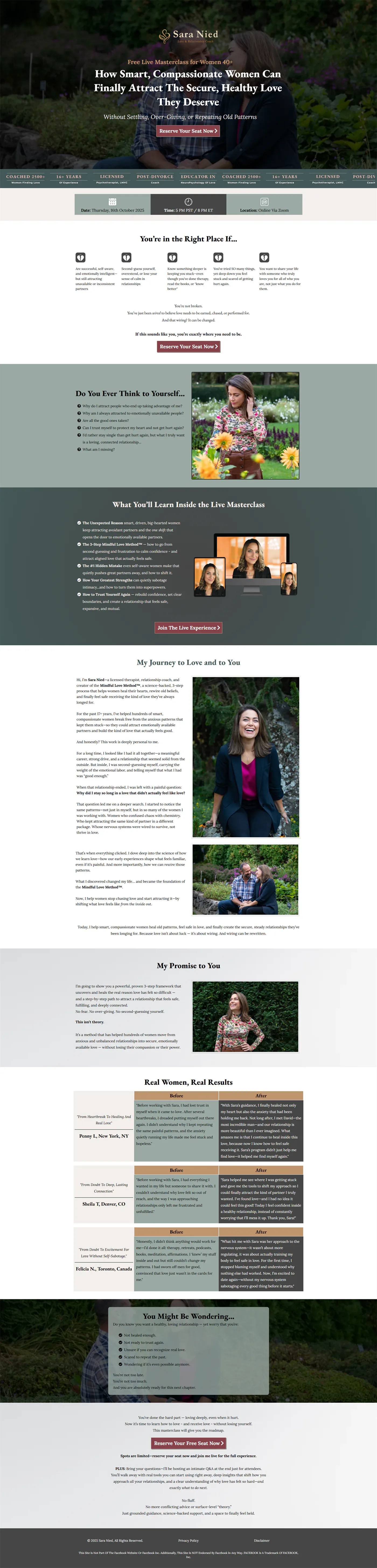
Sara Nied is a relationship coach who had run webinars before and sold nothing through them.
When that engagement started, there was one basic landing page on Ontraport with none of the elements a page needs to convert, and a webinar system that was broken. Everything moved onto GoHighLevel and was redesigned rather than ported. Four funnels replaced the single page, each with its own sequence, and the sequences pass leads between products rather than dropping people who did not want the first thing they saw.
The first webinar she ran on that system produced the first webinar sale the business had made. It was $1,497.
The audience had not changed. What changed was the registration path, the reminders, the attendance handling, the follow up and the tracking, none of which existed before.
What is a good webinar show up rate?
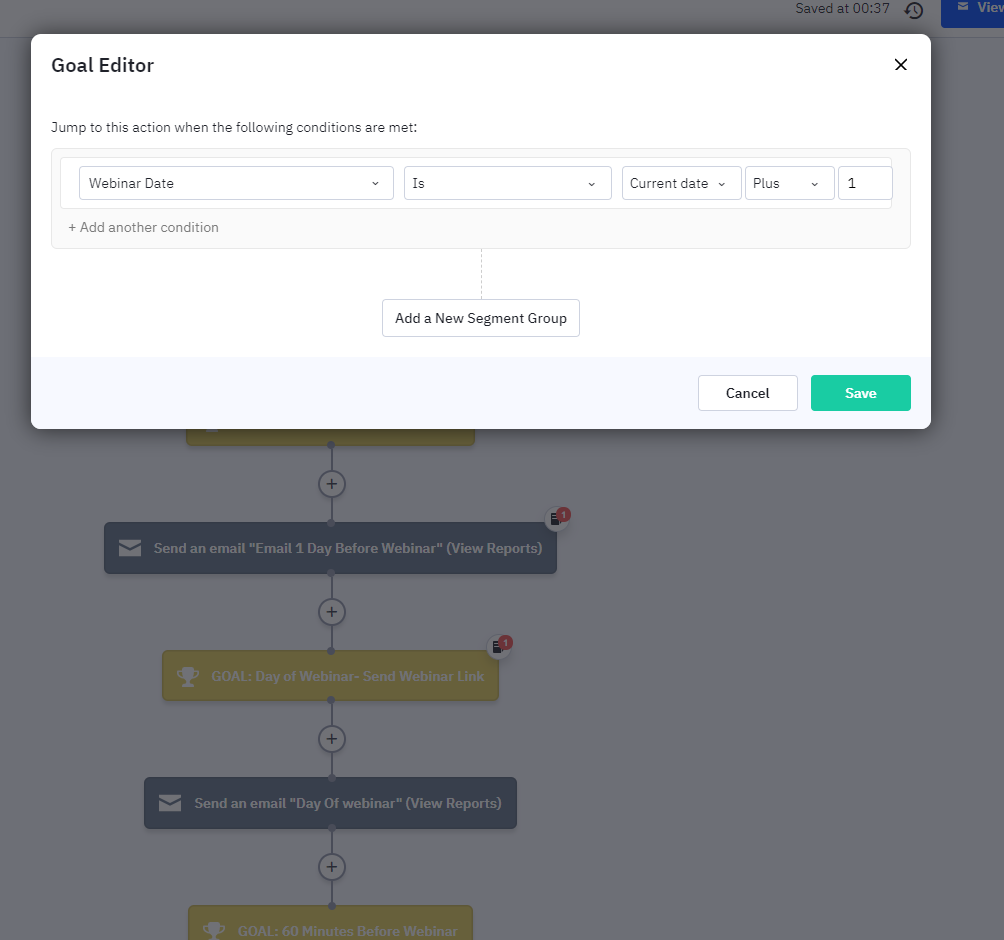
There is no universal benchmark worth quoting, and the useful question is not what other people get but what you were getting before you did anything about it.
On one health and wellness business, attendance sat at 10%. Registration volume was high, so 10% still produced a large number of attendees in absolute terms, which is exactly why the problem persisted. A big number that is also a small percentage does not feel like a leak.
After reminder sequences were built across the gap and attendance was recorded back into the CRM, attendance reached 25%. Two and a half times as many people in the room, on unchanged registrations, from the same traffic, at no additional acquisition cost.
That is the shape of the opportunity. Doubling registrations doubles acquisition cost. Improving attendance costs almost nothing and works on people who have already put their hand up.
Should the webinar be live or evergreen?
Both, eventually, and evergreen is more capable than its reputation.
The objection to replays is reasonable on its face. A replay with no reason to attend at a particular time and no consequence for missing it is a video, and it converts like a video.
What closes the gap is the machinery around it. Scheduling that creates a reason to attend now. Reminders that behave as though an event is happening. Pages before the session that prepare somebody rather than just confirming a registration.
Built that way, evergreen stops being a compromise. On one real estate coaching account the live landing page took 321 page views over twelve months and the replay pages took 32,695, while the funnel produced $2,246,155. The evergreen system was not a supplement to live webinars. It was the business.
How do I know whether my webinar has actually been tested?
Three numbers. If you cannot produce all three, the webinar has not been tested yet.
1. Your registration conversion rate.
What share of people who reach your registration page sign up.
2. Your show up rate.
What share of registrants attend. If this takes more than a minute to find, that is itself the answer.
3. Which source produced the sales.
Not which one got the last click. Which one the buyers first came from.
The second is the one most businesses cannot answer, which is why the reminders and the follow up go unbuilt.
Check Which Part You Actually Tested
The businesses that concluded webinars do not work for them were mostly right about the result and wrong about the cause.
They did not need a better presentation. They needed the nine tenths of the funnel that is not the presentation.
If you have tried webinars and concluded they do not work, it is worth checking which part was actually tested.