
Why Last Click Sends Your Budget To The Wrong Campaign
Your best performing campaign is probably retargeting.
It shows the lowest cost per acquisition, the highest conversion rate, and the cleanest numbers in the account. Every report agrees.
It is also reaching people who had already made up their minds, and taking credit for a decision something else produced.
What does last click attribution actually credit?
Last click gives the sale to whatever a person touched immediately before buying.
That sounds neutral. In practice it systematically favors whatever sits closest to the purchase, which is almost always retargeting, branded search, or an email to somebody already on the list. Those are the touches nearest the end.
The campaign that first put you in front of somebody, weeks earlier, when they had never heard of you, gets nothing. It did the expensive work of creating a customer and the report shows it losing money.
So budget moves. Retargeting scales, cold acquisition shrinks, and for a month or two the account numbers look better than ever, because you are harvesting an audience that was built earlier.
Then it stops working, and nobody can say why. The pipeline of people to retarget was never being refilled.
Why can't you fix this inside the ad account?
Because the ad account does not know who became a customer. It knows who clicked and, if the pixel fired, who reached a confirmation page.
For a business with a short cycle and a single step, that is close enough. For a $3,000 course sold through a webinar, it is not. The purchase might happen twelve weeks after the click, through a different device, after three emails and a replay. The platform's attribution window closed long before.
The record of what actually happened lives somewhere else: in the funnel, in the CRM, in the payment processor. Those systems know who bought. They just were never asked to tell the ad platform.
That is why this is a build problem rather than a media buying problem, and it is why a media buyer working alone usually cannot solve it. The fix sits on the other side of a boundary they do not control.
What does source to sale tracking look like in practice?
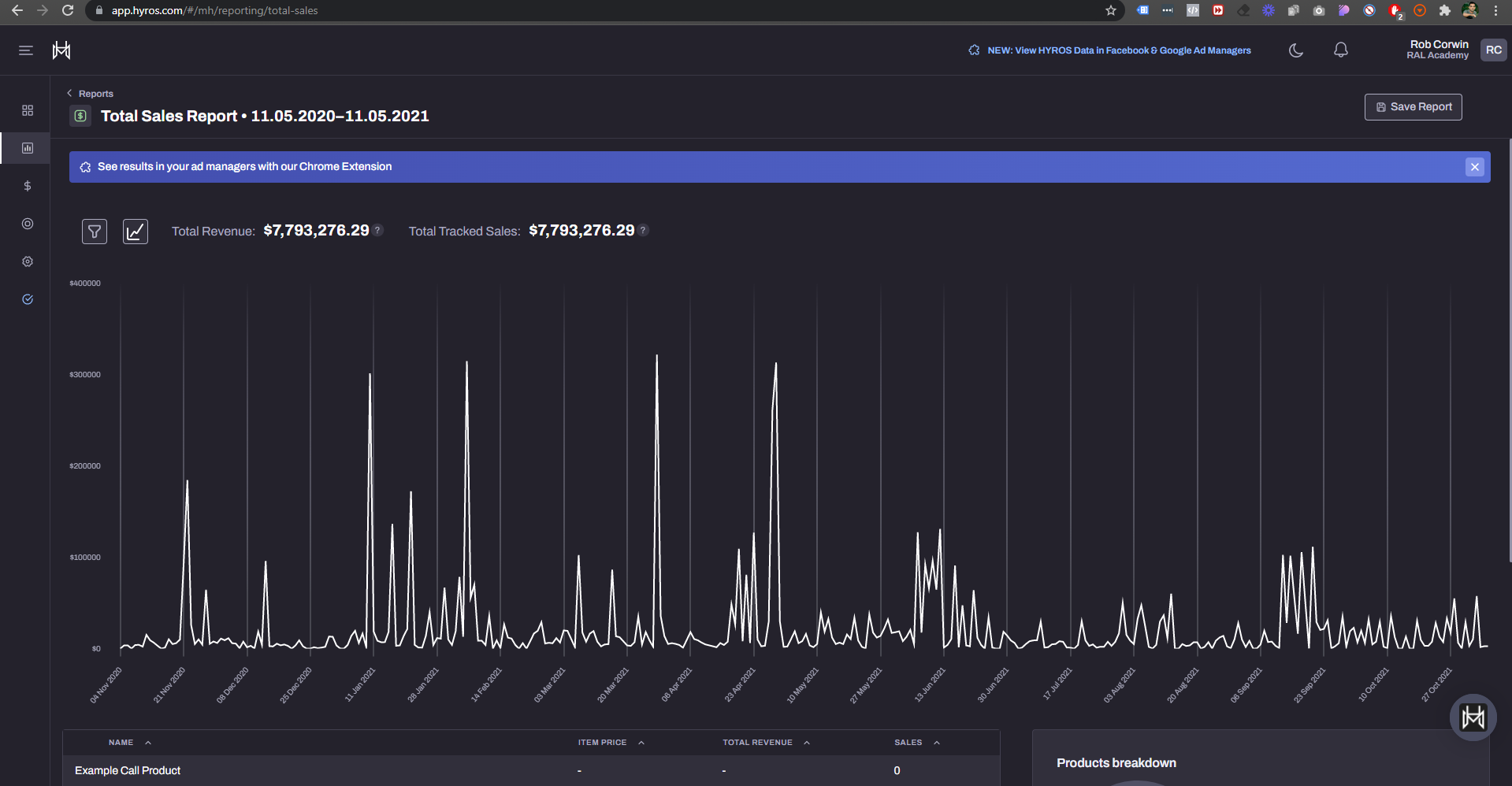
On a real estate coaching business selling a $3,000+ course through webinars, the chain ran source, then webinar behavior, then sales outcome.
Every lead carried its original source through the whole journey rather than only to the registration page. Behavior at the webinar layer was recorded against the contact: registered but missed, attended and left early, watched around half, completed, completed and did not buy, bought. That behavior then decided what happened next, and the eventual purchase could still be traced back to the ad that started it, weeks later.
$7M+ in sales was tracked through that system across twelve months. The build ran on WordPress, ActiveCampaign, StealthSeminar and Zapier. The ads themselves were run by others; the attribution layer was the part I built, as System Engineer at PPC Boutique.
That distinction matters to the argument. The measurement problem was not the media buyer's to fix, and until it was fixed they were allocating a large budget on incomplete information.
First touch or last touch, which should you use?
Both, and the useful part is the comparison.
First touch tells you what creates awareness. Last touch tells you what closes. Neither is the truth on its own, and any single attribution model is a choice about how to assign credit rather than a discovery of where credit belongs.
What is worth building is the ability to see both against the same sale. When first touch and last touch disagree strongly on a channel, that channel is doing one job and being paid for the other. That is the finding that changes budgets, and it is invisible if you only ever look at one model.
Does this matter if I am not running paid ads?
More than most people expect, because the same gap hides organic work.
A large share of traffic in most analytics accounts is filed as direct. Some of that is genuinely direct. Much of it is a source that was lost in transit: a podcast mention, a LinkedIn post, a newsletter someone forwarded.
If you put real effort into content, email or search and cannot put a number on any of it, you are in the same position as the advertiser scaling retargeting. The channel getting credit is the one closest to the purchase, and the work that created the interest is invisible.
How do I know if my attribution is broken?
Three questions, and the third one gives you a number.
1. Can you name the source of your last ten customers?
Not the channel that got the last click. Where they first came from.
2. What happens to a sale that closes eight weeks after first contact?
If your attribution window is thirty days, that sale is credited to something arbitrary or to nothing.
3. What percentage of your traffic is reported as direct?
If it is above roughly a quarter, sources are being lost somewhere. That number is your starting point and it takes two minutes to find.
The Campaign You Are About To Cut
Retargeting is not the villain. It does useful work and it deserves budget.
It just should not be credited with creating the customers it merely finished with, because the campaign that actually created them is the one you are about to cut.
If your reporting cannot tell you which source created a customer, every budget decision this year runs on that gap.